 Water Damage
 How to tell if water damage is new or old comes down to four things you can check in under a minute: color, how it feels to the touch, how sharp the edges are, and whether there's a smell. A fresh stain is dark, damp, and has a sharply defined edge. An old one has faded to yellow or tan, dried out completely, and often announces itself with a musty smell before you ever spot it. Neither read is complicated once you know what to look for — the harder question, especially in Fort Lauderdale's humidity, is what that answer actually means for what happens next.

If you're still narrowing down whether what you're looking at is water damage at all, our guide to signs of water damage covers that first step. This post picks up from there, once you've already confirmed it is.
Color is the fastest visual clue
Color changes as a stain ages, and it changes in a fairly predictable direction. A fresh water stain is usually dark — brown, sometimes almost black at the center — because the material is still saturated, and saturated material simply reads darker than dry material does. Give that same stain a few weeks (less, in Fort Lauderdale's climate) and the color lightens to a pale yellow or tan as it finishes drying out, the same way old newspaper yellows rather than staying dark.

Color alone isn't a perfect test, though. A stain that's been re-wet by a second, smaller leak can look dark again even if the underlying damage is genuinely old. That's one reason the next few checks matter as much as color does, not less.
The touch test tells you what color can't
Color is a first read from across the room. Touch confirms it. A fresh stain still holds moisture — press a gloved finger against it and drywall will feel soft or slightly spongy, and painted surfaces may feel cool or faintly damp. An old stain has finished drying out completely. It feels dry, and depending on how long it's been there, the paint around it may have started to flake or the drywall paper may have begun to separate from the gypsum underneath.
This is also the point where it's worth being careful. Touching a stain you suspect might be growing mold isn't a great idea without gloves, and a stain on a ceiling isn't always reachable safely without the right setup. If reaching it means a ladder and an overhead surface, a professional moisture reading is a safer way to get the same answer.
Edges and texture separate active leaks from settled ones
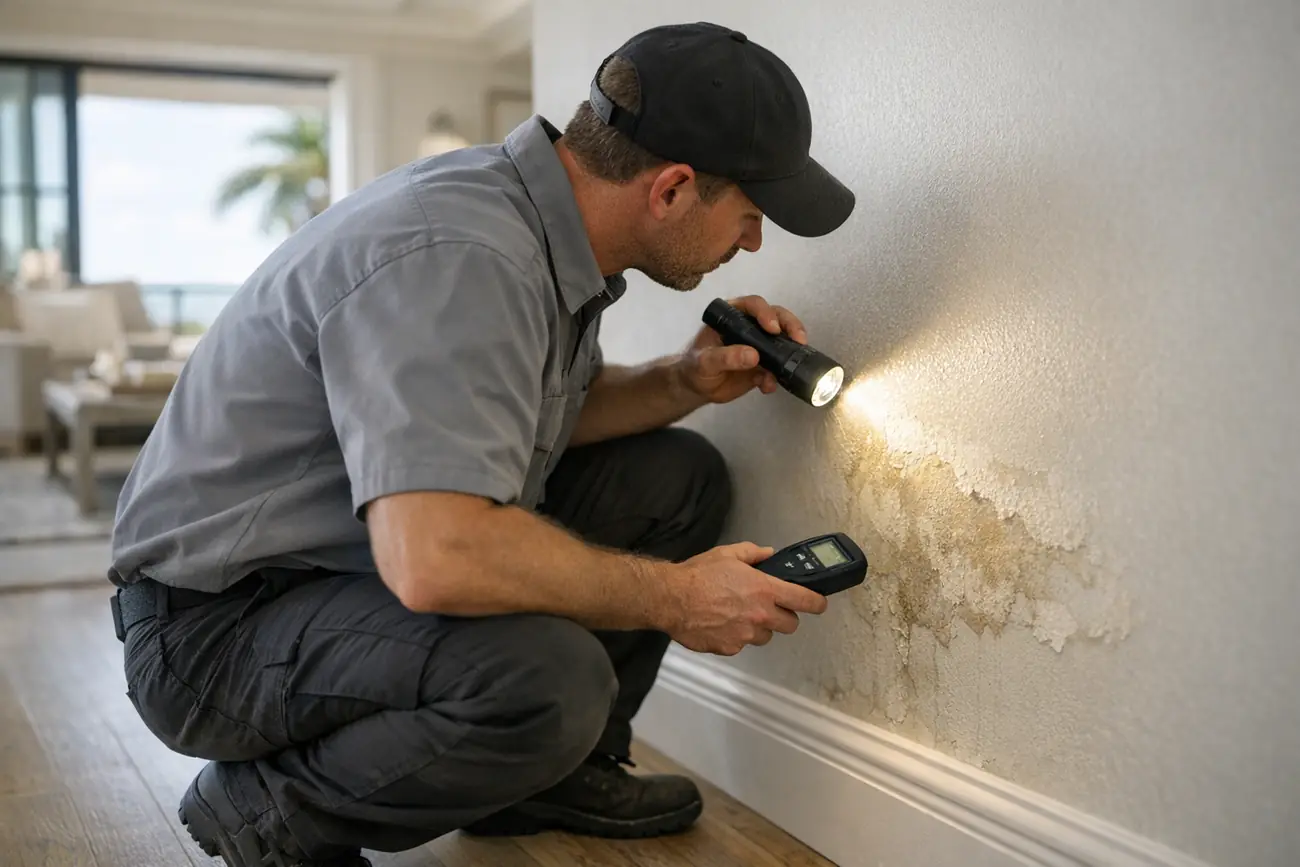
A stain's outline tells you whether water is still moving through the material or whether it stopped a while ago. Fresh damage has a sharp, defined edge, because the water is actively spreading outward through the drywall or ceiling material right now. An old stain has a soft, blurred edge instead — the boundary where the water stopped moving before it fully dried, which tends to look feathered rather than crisp.
A moisture meter takes the guesswork out of this step. Pressed against the material, it gives an actual reading rather than a visual estimate — the difference between a good guess and a confirmed answer, and particularly useful on a ceiling stain where checking color and touch in person isn't always practical.
Smell and growth are the biggest tell for old damage
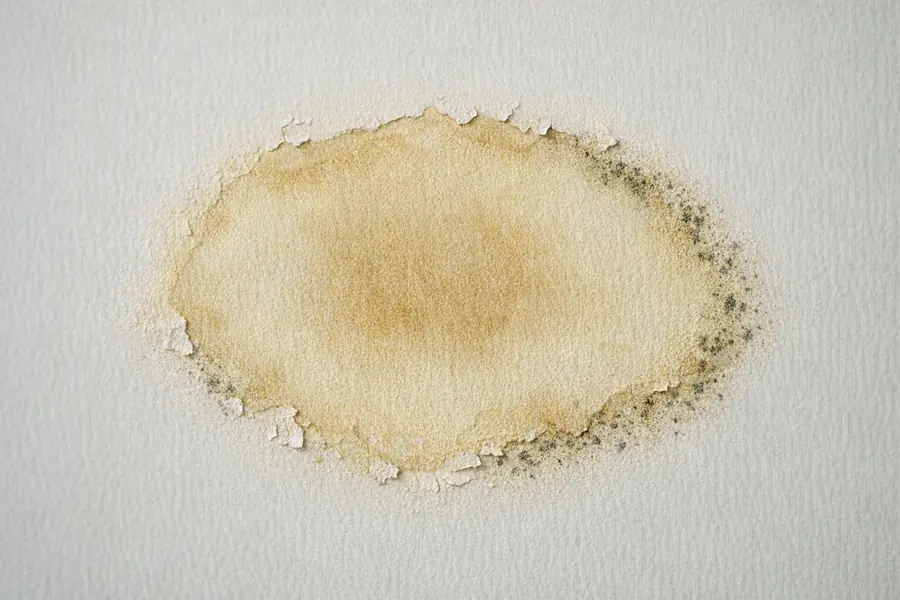
Smell is usually the clearest sign you're looking at old damage rather than new. A water event that happened in the last day or two rarely has a smell yet — there simply hasn't been time for anything to start growing. A musty, damp-basement smell almost always means moisture has been present long enough for mold to get established, which the EPA's guidance on mold and moisture puts at roughly 24 to 48 hours under the right conditions — conditions Fort Lauderdale's humidity meets more often than most of the country.
Visible growth confirms it. Small dark specks along the outer edge of a stain, easy to miss unless you're looking closely, are usually an early mold colony rather than dirt or shadow. Their presence is one of the more reliable signs that whatever caused the stain happened a while ago, not yesterday.
Musty smell, no idea where it's coming from?
That's usually the sign of something that's been going on longer than you'd guess. Worth a real answer before it spreads further.
Old damage doesn't mean the problem is finished
It's tempting to treat "old" as good news — the event is in the past, nothing is actively happening right now. Sometimes that's true. A stain from a roof leak that got repaired months ago, for example, really is a closed chapter; it just hasn't been repainted yet.
Other times, old damage means the source is still active and simply slow enough that it hasn't produced a fresh, obvious wet spot recently. A slow AC condensate drip, a hairline supply-line leak inside a wall, or water tracking in gradually around aging flashing can all keep feeding the same stain for months without ever looking freshly wet, because the rate of new moisture roughly matches the rate it evaporates. The stain looks old because it technically is, but the source behind it was never actually fixed.
That distinction is exactly what a proper assessment settles — not just how old the stain looks, but whether whatever caused it is still happening. If there's still standing water or an active leak involved, water extraction is the right starting point. If what you're really trying to confirm is whether mold has already taken hold, mold remediation covers that side of it.
Why this distinction matters for your insurance claim
New-versus-old isn't just a curiosity — it's often the exact question an insurance adjuster is trying to answer too. Homeowners policies commonly draw a real distinction between sudden, accidental water damage (a pipe that burst yesterday) and gradual or long-term damage from a leak that went unaddressed for months, and Florida's Chief Financial Officer's consumer guidance on homeowners insurance notes that coverage specifics vary significantly by policy on exactly this point. This isn't insurance advice — check your own policy and talk to your insurer about your specific situation — but knowing which side of that line your damage likely falls on before you call is genuinely useful information to walk in with.
It's also part of why restoration contractors document moisture readings and timelines carefully from the first visit, following the same category-and-documentation framework laid out in the IICRC S500 water damage restoration standard. An adjuster reviewing a claim later is going to ask the same new-or-old question you're asking right now, and having it answered with actual readings carries more weight than a description after the fact.
Why Fort Lauderdale's humidity changes the timeline
Everything above holds true anywhere, but the timeline compresses faster here than it does in most of the country. NOAA's National Weather Service office for South Florida tracks humidity that rarely drops the way it does even in nearby inland states, which means a stain that would take a few weeks to fully dry, fade, and develop a musty smell somewhere drier can finish that whole process in a matter of days here. "Looks old" in a Fort Lauderdale home doesn't necessarily mean months — it might just mean last week.
Two local patterns are worth knowing specifically. Most homes here are built slab-on-grade, without a basement or crawlspace for water to travel through and pool somewhere visible, so unexplained old staining on an interior wall often traces back to something inside the wall cavity itself rather than an obvious source like a foundation crack. And air conditioning that runs nearly year-round means a clogged or cracked condensate line is one of the most common culprits behind exactly this kind of slow, unexplained old-looking stain — worth checking before assuming the cause was a single past event.
Sources cited in this article: U.S. EPA, "A Brief Guide to Mold, Moisture and Your Home"; NOAA National Weather Service, South Florida Local Climate; Florida Department of Financial Services, Homeowners Insurance Overview; IICRC, ANSI/IICRC S500 Standard for Professional Water Damage Restoration.